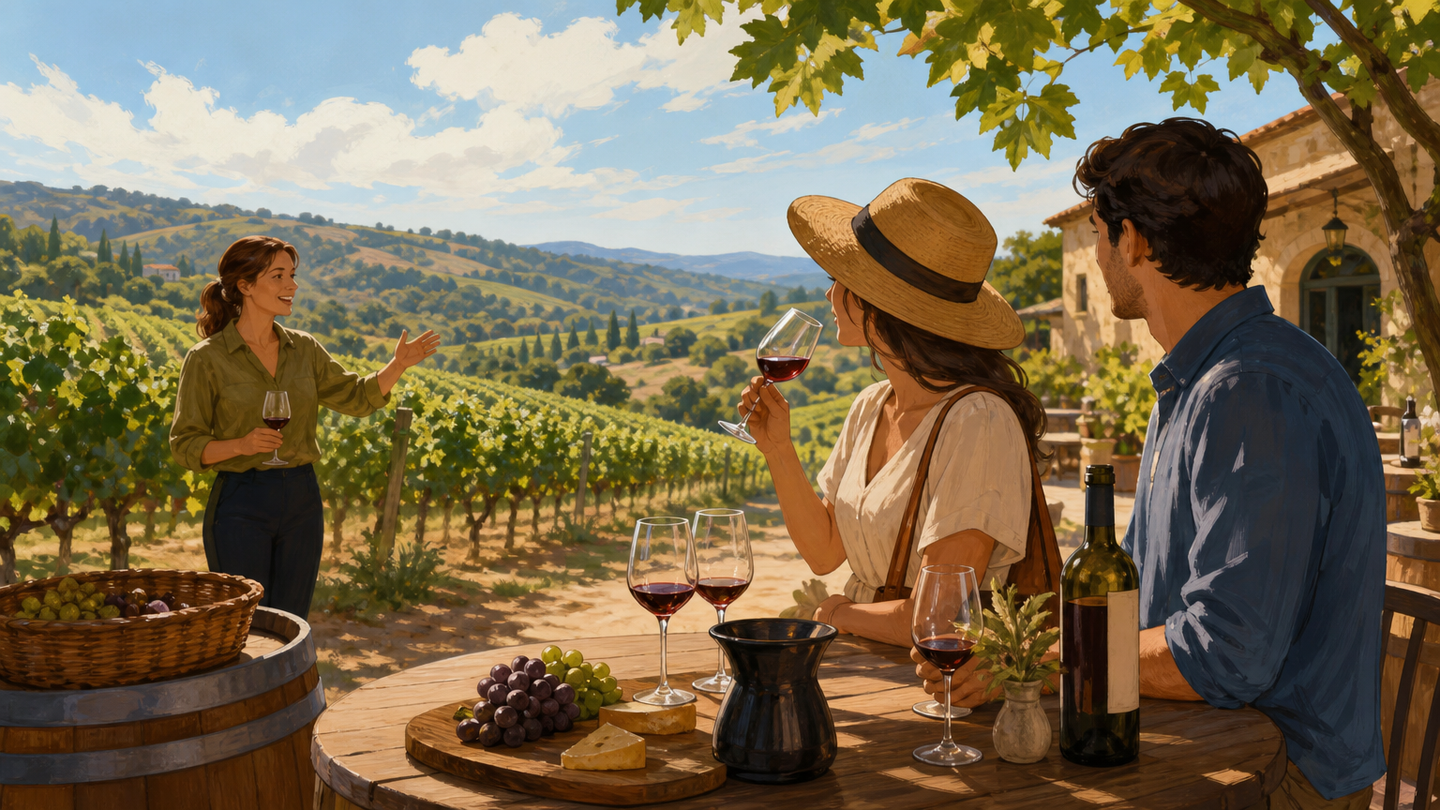
A first wine-country visit is an opportunity to see the landscape behind a bottle, taste with more attention, and learn what you genuinely enjoy. You do not need a trained palate or a memorized vocabulary. Curiosity, a little patience, and a plan for getting home safely are enough to make the experience welcoming rather than intimidating.
Before the First Experience
Start with the basic distinction between a vineyard and a winery. A vineyard is where grapes are grown; a winery is where wine is made and, often, where it is poured for visitors. They may be part of the same property, but the terms describe different parts of the journey from vine to glass.
The setting matters because wine grapes are closely tied to where they grow. Climate, topography, soil, and water all help determine whether a site is suitable for grape production. Within a vineyard, slope and aspect can influence sunlight, heat accumulation, and drainage. Those conditions help explain why a visit is more than a scenic backdrop: the surrounding land is part of the story a wine can tell.
You may hear the word terroir. It refers to grape and wine characteristics influenced by site features such as soil composition, topography, and climate. Think of it as a useful lens, not a test you must pass. When someone points out a slope, a change in soil, or a cooler section of a property, they are inviting you to connect a growing place with what may later appear in the glass.
Before you travel, decide how you will pace the day. A tasting is not a challenge to finish every pour. Eat beforehand, drink water, take your time, and make a transportation plan that leaves driving to someone who has not been drinking. In the United States, a standard drink contains 0.6 fluid ounces, or 14 grams, of pure alcohol; tasting pours can add up more easily than they seem to.
What to Expect at a Vineyard and Winery
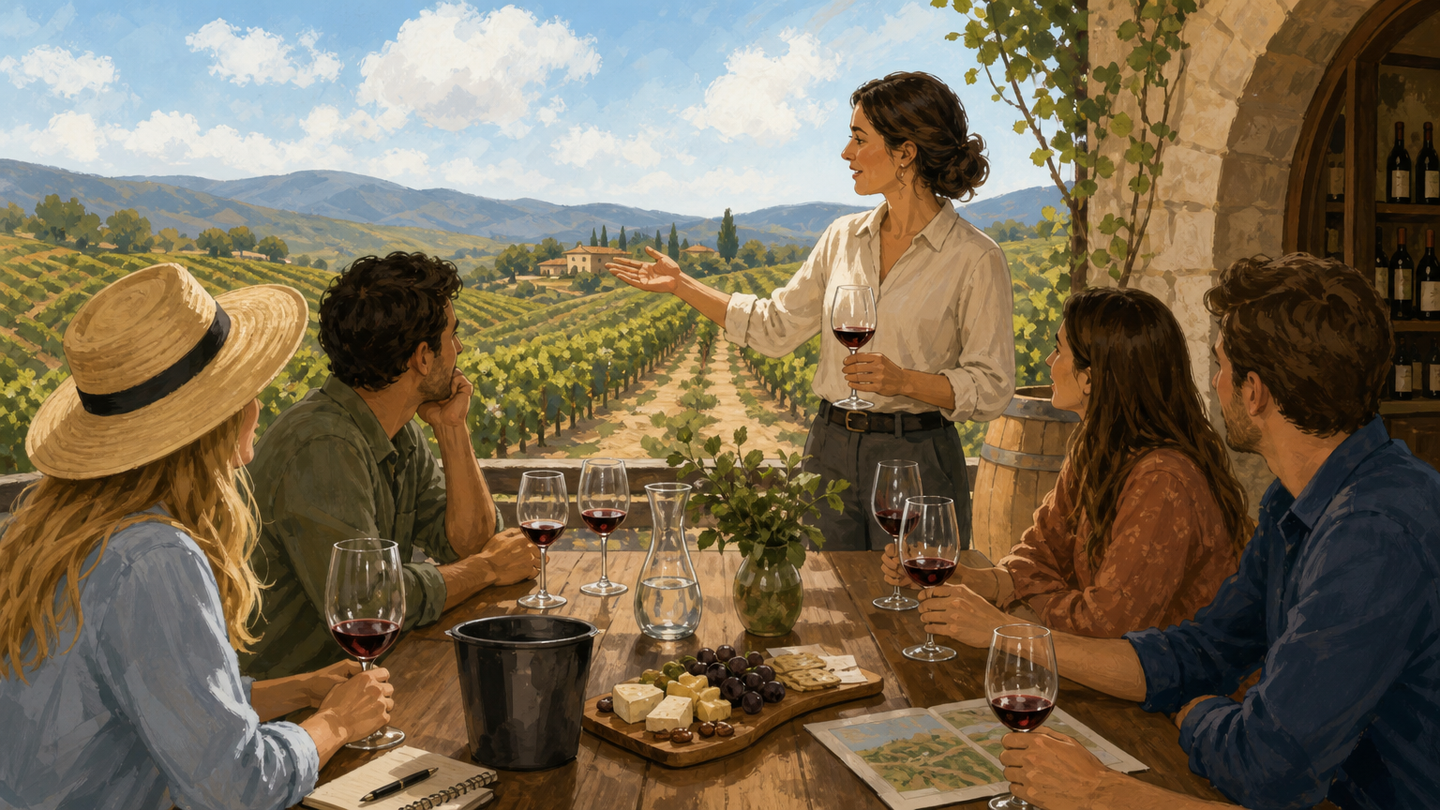
A tasting commonly moves through several wines, often with someone describing the grapes, growing area, or style. The most useful mindset is simple: listen for context, then decide what you notice for yourself. There is no requirement to agree with another person’s impressions, and there is no prize for identifying a long list of aromas.
Wine is made from grapes picked at a carefully judged point of ripeness. Unlike some fruits, wine grapes do not continue to ripen after harvest. While grapes ripen on the vine, sugar rises, acid declines, and pH rises. That balance is one reason harvest decisions matter so much: they shape the raw material from which the wine is made.
At the table, you will likely be encouraged to look, smell, and taste. A helpful professional framework follows four stages: appearance, nose, palate, and conclusions. You can use the same approach informally.
Look, smell, taste, reflect
First, look at the wine. Notice its color and whether it appears pale or deep. Appearance can set the scene, but it does not need to become a puzzle.
Next, smell the wine before tasting it. Aroma is a central part of wine appreciation, so give yourself a quiet moment rather than rushing directly to a sip. You might recognize fruit, flowers, herbs, spice, earth, or something else entirely. If all you can say is that the wine smells fresh, rich, bright, or unfamiliar, that is still a real observation.
Then take a small sip and let it move around your mouth. Consider whether it feels light or full, crisp or soft, dry or sweet. Notice which flavors linger. Finally, form a conclusion in plain language: “I like the lively acidity,” “this feels too heavy for me,” or “I would enjoy this with dinner.” Personal preference is the point.
You may be offered a chance to spit rather than swallow, especially when tasting several wines. That is a normal way to stay alert, focus on flavor, and keep alcohol consumption manageable. It is equally fine to take only tiny sips or decline a wine that does not interest you.
Reading the Bottle and the Landscape
Labels can give you a few useful anchors. A vintage is the year in which the grapes were harvested. An appellation of origin identifies the geographic area where wine inputs were grown. In the United States, an American Viticultural Area, or AVA, is a defined grape-growing region used as an appellation on labels.
An AVA name does not promise that every wine from the region will taste alike or that it will suit every palate. It tells you something about geographic origin. For a wine using an approved AVA appellation, at least 85 percent must come from grapes grown in that named viticultural area. That makes the place name meaningful, while still leaving room for differences in vineyards, growing conditions, and winemaking choices.
Grape names on American labels are regulated as well, with minimum-percentage requirements and exceptions. For a visitor, the practical takeaway is that a familiar variety name can be a useful starting point, but it is not a complete prediction of style. Let the pour, the setting, and your own response fill in the rest.
Questions Worth Asking
Good tasting-room questions are specific, relaxed, and connected to what is in front of you. Try asking:
- What is this wine’s grape variety or blend? – Where were the grapes grown? – What do you want visitors to notice first in this wine? – How would you describe its balance of fruit, acidity, and texture? – Is there something about this site’s climate, soil, slope, or exposure that shapes the grapes? – Which wine would you suggest for a meal, and why?
These questions invite conversation without assuming you already know the answers. They also turn an unfamiliar bottle into a set of understandable choices: grape, place, style, and occasion.
Starting With Confidence
Wine country rewards a slower pace. Spend time looking at the vines and the contours of the land, then let each pour be its own experience. Take notes if that helps, but a few words are enough: what you smelled, how the wine felt, whether you would drink it again, and what food you imagine alongside it.
The best first visit is not defined by how many wines you taste or how much terminology you learn. It is defined by leaving with a clearer sense of the connection between growing place, grape ripeness, and flavor—and with more confidence in your own preferences. Before making travel plans, confirm reservations, access, transportation, and service details directly with the winery or destination.
Information may contain errors, omissions, or outdated details. Confirm time-sensitive information with the relevant official or authoritative source.